Guy Tomash – Tai Chi in Vancouver

Author: Guy Tomash

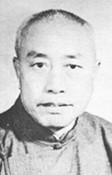
  • Words of Experience by Tung Ying Chieh

    Words of Experience by Tung Ying Chieh

    Translated by Albert Tang – Little Mountain Tai Club Student
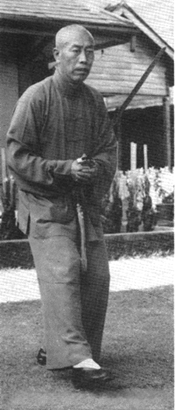
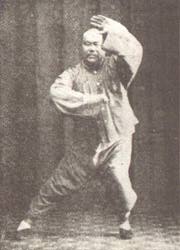
    Tung Ying Chieh Sword - Vancouver Tai Chi 1.Tai Chi Chuan is an internal martial art exercise. Strength is produced in the bones. Power is reserved at the muscles. It does not require one to have tough skin or thick muscles, but sunken “chi” and strong bones are required. Therefore, learners have no suffering of broken bones and hurt muscles, and the tiredness of jumping, but just move naturally to find the potential of power of origin. It is an exercise to develop the your original power.

    2. The three main points: spirit, intention, and posture (likeness of the movement’s names) have to be there.If the posture is correct, then the spirit and intention are there, and you will have good progression. Also, you will feel differently every day. Learners should try to feel the differences intentionally.

    3. If the posture is not correct, then spirit and intention are not there. The result will be just like cooking an empty pot, even after many years of practice you will not be successful. There is a tease saying that ten years of Tai Chi Chuan practice is not as good as three years of kung fu. Therefore, for good Tai Chi Chuan practice: first you have to practice diligently; and secondly you need to have good understanding. Also, the result is dependent on your intelligence, but hard practice can help stupidity. So you should always encourage yourself to practice harder.

    4. Breathing during practice – to breathe naturally. Do not force your breath deeply. After many times of practice, your Tai Chi Chuan will reach the natural point. By that time, the breath will be balanced automatically.

    5. Originally the thirteen movements of Tai Chi Chuan are the guiding methods of “chi”. Guiding means leading the circulation of “chi” and blood. Therefore, when you do a good job of guiding, the “chi” and the blood will have a good balance. All sickness will be gone, but don’t misunderstand the method, and try very hard to obtain that balance. If you practice hard and naturally, you will get it when you reach maturity (when the time comes).

    6. Loosen the shoulders and drop the elbows means don’t hold the strength on the shoulders. Don’t try to make the hands heavy, but move smoothly and lightly.

    7. Suspend your top (of your head), and hold the bottom (anus). To suspend the top, the head has to be held naturally. If you hold the bottom, the “chi” will come up from there automatically. To withdraw the power, the breast has to be a bit vacant, but don’t hold your breast and bend your back.

    8. Every time when you practice the form, there are at least three things you must do. The first one is to relax your muscle. The second one is to adjust your postures. The third one is to concentrate more on intentions and spiritual styles. When you can master all the movements, then the spiritual style will appear when you move. When you reach this stage your improvement will be better and quicker.

    9. Feeling and understanding of power – To learn these you have to practice more of the push hands, then you will get the benefits of stick, hold, touch, and follow. If you don’t have a partner, you can always practice the form diligently, and always use two arms to feel the power. Try to imagine that your opponent is attacking you, and the way in which you are using to control him. If you keep on practicing like that for a long time, certainly you will learn the power too.

    10. When you are doing push hands, the most important thing is to study the feeling of power, not trying to knock down your opponent. Try not to let your opponent discover your center, and always control your opponent’s center.

    11. You can practice Tai Chi Chuan while you are walking, standing, sitting, and laying. The method is to use your mind to circulate the “chi”, and find the feeling. For example: to feel the difference between holding a tea cup with strength, and without strength; to feel the difference of walking with heavy steps, and with light steps. When you are standing still, try to feel the difference of straightening your legs, and bending your legs; one leg, or two legs on the ground.

    12. During the early stages of practicing Tai Chi Chuan you might experience sore muscles, but don’t worry, as this will pass and you will feel good later.

    13. Basic steps to learning push hands is to know the power. There are many different types of power such as: stick on power, follow on power, internal power, suspending power, rubbing power, tendering power, fastening power, holding power, touching power, and pushing power. As well there are types of power such as penetrating bone power, shaking power, crisp power, sudden power, tenth of an inch power, shooting arrow power, and even power. In general the above powers are learned from the feeling developed during practice. It is harder to learn the power by oneself, but easier with two people, as people are alive. Additionally, you can use your own adjustment and feeling when you are enforcing the power. Of course, all the types of power are learned and discovered from body movements. If you have no partners, you can learn the power from the AIR.

    14. The principles of Tai Chi Chuan: The root is on the feet; enforced from the legs; controlled by the waist; and expressed by the fingers. These are the principles of enforcing power: never let the knees come over the toes; never stretch the hands over your nose; never raise over your eyebrows; and don’t press down below the center of the chest. All these are traditional rules. If you break these rules, then the power will not be as good. The variation is controlled by the waist. For example: If you push someone to the left with your right hand sideways, and your hand is over your nose, then the power will not be there. But if you let your left chest withdraw backward a little bit, and turn your waist to the left a little bit, then the power is there again. So this variation is on the chest, and controlled by the waist, and finally shows on you fingers, If the whole body is relaxed and sensitive, then strong power will show on the fingers.

    15. People are animals, but with senses. For example: if I hit someone with my fist, the opponent certainly will use hands to block, or move his body to avoid the attack. It is the natural reaction of people, but materials are different. An example of this is a hanging sandbag. It is motionless hanging there. If you punch it, it will move forward and backward. The way it moves is on a fixed route. If you punch it to the left it will move back to the right. It is the reaction of materials. But people are different, the opponent will have various reactions for a punch. Therefore, a boxer has three words: steady, accurate, and fierce. If I don’t have these three qualities, I cannot enforce the power. If I do, then the power has to be powerful. So, how to get steady, accurate, and fierce? First, you have to have sense. So, how does one get sense? Don’t move if the opponent is not moving. If the opponent moves, you follow and finish the movement before he does. So you will have to fight for that second to finish the movement. Then you will be unbeaten.

    16. Before learning Tai Chi Chuan, The strength might be dull strength. After learning Tai Chi Chuan the whole body is relaxed, and with good circulation of the “chi” and blood. But you must get rid of all the nervous tension, and keep the original dull strength. Because when you are relaxed, dull strength can be turned into real power. An example of dull strength is what some people call shoulder power, as the strength is held at the shoulder, and is not controlled by the waist and shown on the fingers. Therefore, dull power is the capital. Relaxation is the Method. If you know the method, then even small capital can achieve great success. if you don’t know the method, then even with big capital you cannot be successful. That’s why if you understand the principle of Tai Chi Chuan, it will benefit you for all kinds of sports.

    © 1998 Little Mountain Tai Chi


  • Yang Style Eye Usage

    Yang Style Eye Usage

    By Yang Zheng Ji
    Translated by Peter Lim Tian Tek

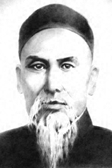
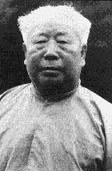
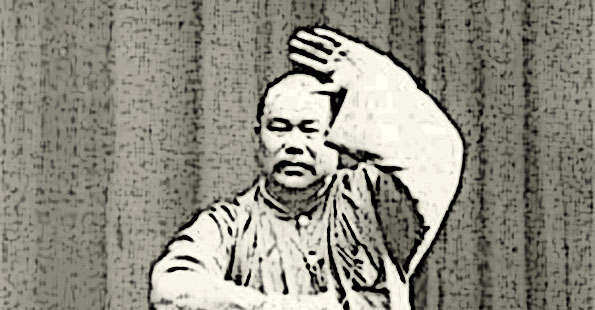
    Yang Cheng Fu - Tai Chi VancouverYang style Taijiquan is very particular about the method of using the eyes. Tradition has it that when Yang Cheng Fu pushed hands or engaged in combat, when emitting jing would look at the opponent and  the opponent on receiving the strength would fall in the direction which he looked. Looking at Yang Shao Hou’s precious image, his eyes appears to have brightness shooting forth, this is a result of long term training fully concentrating on the eyes as well as the internal qi.
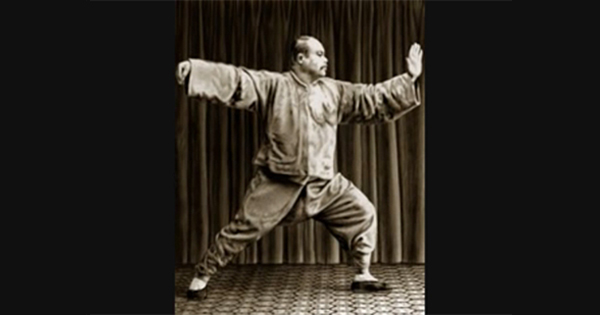
    Yang Cheng Fu said: ” The eyes though should look forward levelly, sometimes following the body and so shift, the line of sight though may be fixed on emptiness is an essential movement in the change, this compensates the body method’s inadequacies”.

    Yang style Taijiquan’s requirements regarding the eyes are:

    1. The eyes should look forward levelly. In normal circumstances, the eyes look levelly forward, looking through the hand in front towards the front, caring for the hand, but not fixed dead on the hand. The eyes can also look downward to the front, it must follow the boxing posture’s main hand movement and so determine the direction to look.

    2. The expression of the eyes is in accordance to the movements, the principle of the eyes turning follows the body’s movements. The body moves the eyes follow, the body faces what direction, the eyes gaze towards that direction. Taijiquan’s practice has continuous forward advancing backward retreating left and right turns, when forward advancing backward retreating, left turn right rotate depends on the waist and body turning, the eyes in left looking right glancing must follow the waist and body’s turning to turn.

    3. The eyes and the intent are consistent. The eyes are the mind’s focal point, what the mind is considering, the eyes is concentrated upon, if the eyes and the movements are not in accordance the internal and external are also not in agreement, the usage of the eyes have an important use in push hands, necessary to observe the opponent’s upper and lower portions, closely observing the direction of movement of the opponent’s back, in the course of movement catching hold of the opportune time to cause the opponent to be in a predicament.

    4. The method of the eyes must be natural. When utilizing the eyes, do not stare, do not close the eyes, keep the spirit held within. The correct use of the expression of the eyes has a relationship with the energy at the top is light and sensitive (xu ling ding jing), the energy at the top is light and sensitive, then the spirit can be raised, then the eyes will naturally have expression.

    From Peter Lim’s Resource Page

    – Yang Zheng Ji is the son of the famous Yang Cheng Fu –


  • Talks On The Practice Of Taijiquan

    Talks On The Practice Of Taijiquan

    Narrated by Yang Cheng Fu
    Recorded by Zhang Hong Kui

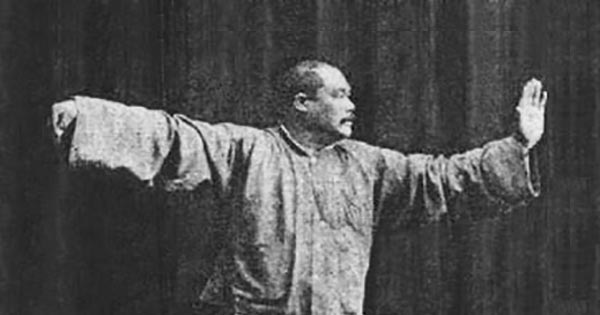
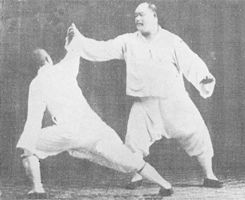
    Yang Cheng Fu Application - Vancouver Tai ChiThere are many schools of Chinese wushu (martial arts), all with technical skills based on philosophy. Since ancient times, many people have devoted their lifetime and energy to probing the nature and essence of wushu and mastering the maximum skills, but few have succeeded. However, a learner can improve his skill if he keeps on practicing and someday he will become an expert. As the saying goes: Drops falling, if they fall constantly, will bore through a stone.
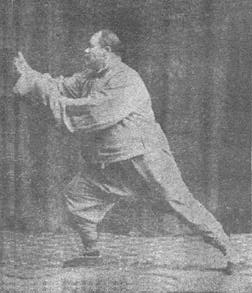
    Taijiquan is a part of the rich cultural heritage of China. It is an art in whose slow and gentle movements are embodied vigour and force. As a Chinese saying aptly puts it, “Inside the cotton is hidden a needle”. Its technical, physiological and mechanical qualities all have a philosophical basis. For learners, the guidance of a good teacher and discussions of the skills and techniques with friends are necessary, but the most important thing is persistent and untiring practice. Indeed, there is nothing like practice, and learners of taijiquan, men and women, young and old, will get the best possible results if they keep at it all the year round.

    In recent years, the number of people studying taijiquan in various parts of China has been increasing. This is an indication of the bright prospects of wushu. Many learners are conscientious and persistent in training, which will enable them to attain a high level of achievement. It should be pointed out that two wrong tendencies should be guarded against. The first is that some some people who are young and talented acquired a quicker understanding than most other people and so become complacent and stop half way. These people can never achieve great success. The second wrong tendency is that some learners are too anxious to achieve quick success and get instant benefits. They want to learn everything in a short time, from shadow boxing to wielding the sword, broadsword, spear and other weapons. They know a smattering of each, but do not grasp the essence and their movements and postures are full of flaws to the expert eye. It is difficult to correct their movements, for a thorough “overhaul” is needed and , as often as not, they might change in the morning and return to the old habits in the evening. Hence the saying in Chinese boxing circles: “Learning taijiquan is easy but to correct a wrong style is difficult”. In other words, more haste less speed. And if these people pass on their mistakes to others, they will be doing a great harm.

    In learning taijiquan, one should first of all start from the quan jia or frame of boxing; he should practice according to the routines and follow the master’s every movement carefully, and keep each action in mind. Meanwhile, he should pay attention to the nei, wai, shang and xia. Nei means using the mind rather than force. Wai means the relaxation of the limbs, shoulders and elbows, making the movements from the foot to the leg to the waist gentle and continuous. Shang means straightening the head, and xia means sinking the breath to the lower belly.

    For a beginner, the most important thing is to remember these points, grasp their essence and practice each basic movement correctly over and over again, never seeking quick success and instant benefit. It is advisable to make slow and steady progress, for this will pay in the long run. In practicing taijiquan, it is necessary to keep all the joints in the body relaxed, so that the movements will be natural and unrestrained. Do not hold your breath (that may lead to puff and blow), and do not use stiff strength in moving the arms, legs and waist and body, but try to make your movements gentle and continuous. These two points are well-known among the wushu experts, but many trainees have difficulty putting them into practice.

    The learners should bear in mind the following points:

    1. Keep your head erect and do not incline it forward or backward. As the saying goes, “Its like there is something on your head, and you should take care not to let it fall”. But you should not hold your head in a stiff manner, and though your eyes look straight ahead, they should follow the movements of the limbs and body. Although your eyes look into vacancy, they are an important component of the movements of the body as whole. Your mouth should remain half open and half closed, with the nose breathing in and mouth breathing out naturally. If saliva is produced in the mouth swallow it.

    2. Hold the torso straight and the backbone and free end of the sacrum vertical. When moving, always keep the chest slightly inward and the back upright. The beginners should keep these key points in mind, otherwise their movements will become mere formality or dull-looking, and they will not be able to make much progress in spite of long years of practice. 3. Relax the joints of both arms, letting the shoulders droop and the elbows curve naturally; the palms should be slightly extended and the fingers slightly bent. Move the arms by consciousness and send qi (breath or vital energy) to the fingers. Remember these key points and success will be yours.

    4. Take not of the difference in stance between the two legs which move as gently as those of a cat. When one foot is planted firmly on the ground,the other is in an empty stance. When you shift the weight on to the left leg, then the left foot is firmly on the ground, while the right foot is in an empty stance, and vice verse. though the foot is in an empty stance it is always ready to move. When the foot is firmly on the ground, it does not not mean that you should exert too much force on that leg, for if you do so, your body will incline forward and you will lose your balance.

    5. The action of the feet is divided into kicking upward and kicking downward. When you kick upward, pay attention to your toes, and when you kick downward, pay attention to the sole; consciousness of the action will be followed by vital energy, and vital energy will be followed by strength. When you do all this, you should relax the joints and avoid stiffness.

    In practicing taijiquan, one should first master and practice the “frame” as above mention (bare-handed forms), such as Taiji shadow boxing and changquan (long shadow boxing); then one can proceed to single-hand pushing, one-site pushing, pushing with feet moving and free-hand fighting, and after a period one can take exercises with weapons such as taiji sword, taiji scimitar and taiji spear.

    Learners should practice regularly every morning or before going to bed. It is preferable to practice seven or eight times during the daytime; if one is hard pressed for time, then at least once in the morning and once in the evening. Do not practice immediately after meals or after drinking. The best place is in the gardens or parks where the air is fresh and the environment conducive to health. Do not practice on windy days or in a filthy place. For when you do exercise, you might breathe in too much dust or dirt which is harmful to your lungs. It is advisable to put on sportswear and comfortable cloth or rubber shoes. When you sweat, don’t take off your clothes or wipe with cold towels, lest you catch cold and fall ill.

    EXCERPT FROM THE BOOK: YANG STYLE TAIJIQUAN, by Yang Zhen Duo


    Check out our other blog articles on Tai Chi


  • Yang Cheng Fu’s Ten Principles on Tai Chi Chuan

    Yang Cheng Fu’s Ten Principles on Tai Chi Chuan

    Narrated by Yang Cheng Fu
    Recorded by Chen Wei Ming

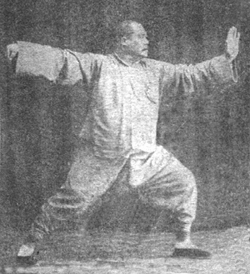
    Yang Cheng Fu Ward Off - Tai Chi Vancouver1. Straightening The Head

    Stand straight and hold the head and neck naturally erect, with the mind concentrating on the top. Do not strain or be tense; otherwise, the blood and vital energy cannot circulate smoothly.

    2. Correct Position Of Chest And Back

    Keep the chest slightly inward, which will enable you to sink your breath to the dan tian (lower belly). Do not protrude your chest, otherwise you will feel uneasy in breathing and somewhat “top heavy”.

    Great force can be launched from the spine only when you keep the vital energy in your lower belly.

    3. Relaxation Of Waist

    For the human body, the waist is the dominant part. When you relax the waist, your two feet will be strong enough to form a firm base. All the movements depend on the action of the waist, as the saying goes: “Vital force comes from the waist”. Inaccurate movements in taijiquan stem from the erroneous actions of the waist.

    4. Solid And Empty Stance

    It is of primary importance in taijiquan to distinguish between “Xu” (Empty) and “Shi” (Solid). If you shift the weight of the body on to the right leg, then the right leg is solidly planted on the ground and the left leg is in an empty stance. When your weight is on the left leg, then the left leg is firmly planted on the ground and the right leg is in an empty stance. Only in this way can you turn and move your body adroitly and without effort, otherwise you will be slow and clumsy in your movements and not able to remain stable and firm on your feet.

    5. Sinking Of Shoulders And Elbows

    Keep your shoulder in a natural, relaxed position. If you lift your shoulders, the qi will rise with them and the whole body will be without strength. You should also keep the elbows down, otherwise you will not be able to keep your shoulders relaxed and move your body with ease.

    6. Using The Mind Instead Of Force

    Among the people who practise taijiquan, it is quite common to hear this comment: “That is entirely using the mind, not force”. In practising taijiquan, the whole body is relaxed, and there is not an iota of stiff or clumsy strength in the veins or joints to hinder the movement of the body. People may ask: How can one increase his strength without exercising force? According to taditional Chinese medicine, there is in the human body a system of pathways called jingluo (or meridian) which link the viscera with different parts of the body, making the human body an integrated whole. If the jingluo is not impeded, then the vital energy will circulate in the body unobstructed. But if the jingluo is filled with stiff strength, the vital energy will not be able to circulate and consequently the body cannot move with ease. One should therefore use the mind instead of force, so that vital energy will follow in the wake of the mind or conciousness and circulate all over the body. Through persistant practice one will be able to have genuine internal force. This is what taijiquan experts call “Lithe in appearance, but powerful in essence”.

    A master of Taijiquan has arms which are as strong as steel rods wrapped in cotton with immense power concealed therein. Boxers of the “Outer School” (a branch of wush with emphasis on attack, as opposed to the “Inner School” which places the emphasis on defence) look powerful when they exert force, but when they cease to do so, the power no longer exists. So it is merely a kind of superficial force.

    7. Coordination Of Upper And Lower Parts

    According to the theory of taijiquan, the root is in the feet, the force is launched through the legs, controlled by the waist and expressed by the fingers; the feet, the legs and the waist form a harmonious whole. When the hands, the waist and the legs move, the eyes should follow their movements. This is meant by coordination of the upper and lower parts. If any part should cease to move, then the movements will be disconnected and fall into disarray.

    8. Harmony Between The Internal And External Parts

    In practising taijiquan, the focus is on the mind and conciousness. Hence the saying: “The mind is the commander, the body is subservient to it”. With the tranquility of the mind, the movements will be gentle and graceful. As far as the “frame” is concerned, there are only the Xu (empty), shi (solid), kai (open) and he (close). Kai not only means opening the four limbs but the mind as well, he means closing the mind along with the four limbs. Perfection is achieved when one unifies the two and harmonizes the internal and external parts into a complete whole.

    9. Importance Of Continuity

    In the case of the “Outer School” (which emphasizes attack) of boxing, the strength one exerts is still and the movements are not continuous, but are sometimes made off and on, which leaves opening the opponent may take advantage of. In taijiquan, one focuses the attention on the mind instead of force, and the movements from the beginning to end are continuous and in an endless circle, just “like a river which flows on and on without end” or “like reeling the silk thread off cocoons”.

    10. Tranquility In Movement

    In the case of the “Outer School” of boxing, the emphasis is on leaping, bouncing, punching and the exertion of force, and so one often gasps for breath after practising. But in taijiquan, the movement is blended with tranquility, and while performing the movements, one maintains tranquility of mind. In practising the “frame”, the slower the movement the better the results. this is because when the movements are slow, one can take deep breath and sink it to the dan tian. It has a soothing effect on the body and the mind.

    Learners of taijiquan will get a better understanding of all this through careful study and persistant practice.

    EXCERPT FROM THE BOOK: YANG STYLE TAIJIQUAN, by Yang Zhen Duo

    Yang Style Taijiquan


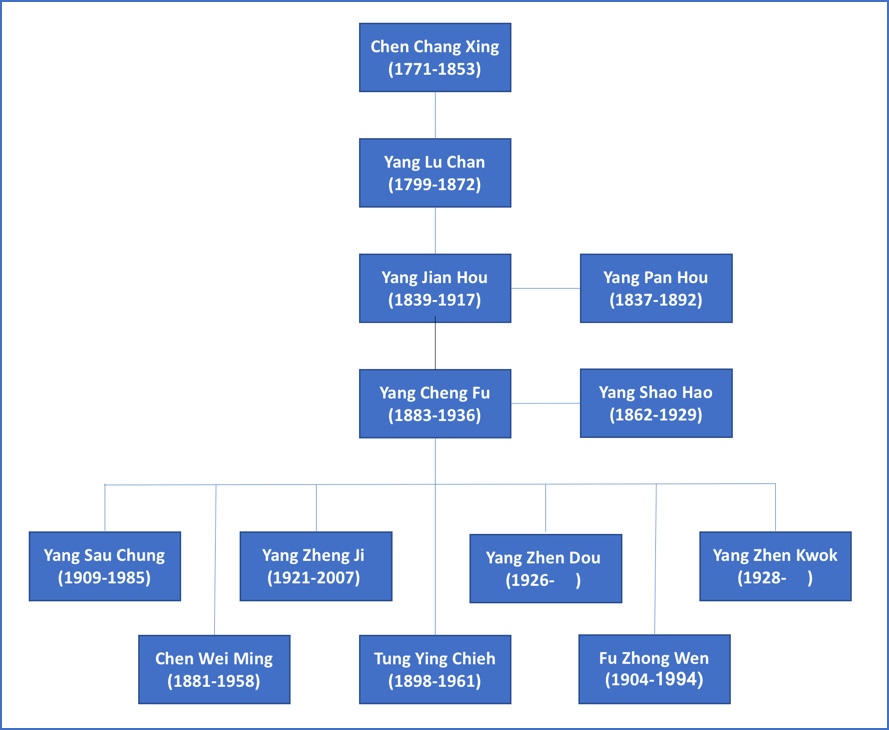
  • Yang Style of Tai Chi Chuan Lineage Chart

    copyright © 1998 Little Mountain Tai Chi Club


  • Famous Yang Style Masters

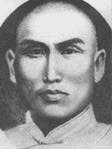
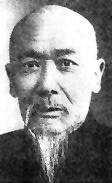
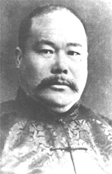
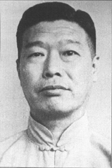
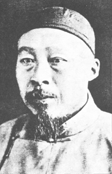
    Yang Lu Chan - Tai Chi VancouverYang Lu Chan (1799-1872)

    Yang Pan HouYang Pan Hou (1837-1892)

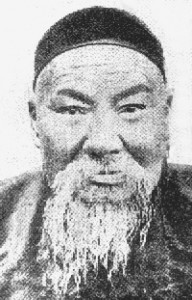
    Yang Jian Hao - Vancouver Tai ChiYang Jian Hou (1839-1917)

    Yang Shao Hao - Vancouver Tai ChiYang Shao Hao (1862-1929)

    Yang Chent Fu - Tai Chi VancouverYang Cheng Fu (1883-1936)

    Yang Sau Chung - Tai Chi VancouverYang Sau Chung (1910-1985)

    Chen Wei Ming - Tai Chi VancouverChen Wei Ming (1881-1958)

    Tung Ying Chieh - Tai Chi VancouverTung Ying Chieh (1898-1961)

    Fu Zhong Wen - Tai Chi VancouverFu Zhong Wen (1904-1994)


  • Brief History of Yang Style Tai Chi Chuan

    Brief History of Yang Style Tai Chi Chuan

    TYang Cheng Fu - Yang Style Tai Chi Chuanai Chi Chuan is a part of the rich cultural heritage of China; dating back hundreds of years. Literally translated as “Grand Ultimate Fist” (Grand Ultimate meaning all that is yin and yang in the universe). It was originally developed as a martial art, but is best known as an exercise for health and meditation. Tai Chi Chuan is based on the principles of yin and yang, a balance of opposites, such as hard and soft, fast and slow, and light and heavy. It uses the soft to overcome the hard; the maxim of “Four Ounces To Deflect A Thousand Pounds”.


    The main schools of Tai Chi Chuan are the Chen, Yang, Wu, and Sun styles. Although each of the styles are practiced differently, they all follow the principles of yin and yang, and using the body to its most efficient use with the least amount of effort.

    The Yang Style of Tai chi Chuan was first developed by Yang Lu Chan in the mid 1800’s. Yang Lu Chan had trained in the Chen style of Tai Chi Chuan for approximately eighteen years, and had become very proficient in the art. He became famous, and was known as “Yang the Invincible”. The art was passed down from father to sons. Yang Lu Chan’s grandson, Yang Cheng Fu, standardized and made the style popular throughout China in the early 1900’s. Today the Yang style, which is named after the family surname, is the most practiced style of Tai Chi Chuan in the world today.

    The Tai Chi Chuan of Yang Cheng Fu is a complete system of martial arts. The Long Form consists of 108 series of movements, which are characterized by an even tempo and slow graceful circular movements. There is weapons training, which consists of saber, sword, and spear, which are practiced with a broken tempo with slow and fast movements. There are also various single and two person training exercises to complement the system. The Yang style of Tai Chi Chuan is well known for its benefits of health, meditation, and self defence.

    copyright © 1998 Little Mountain Tai Chi Club